

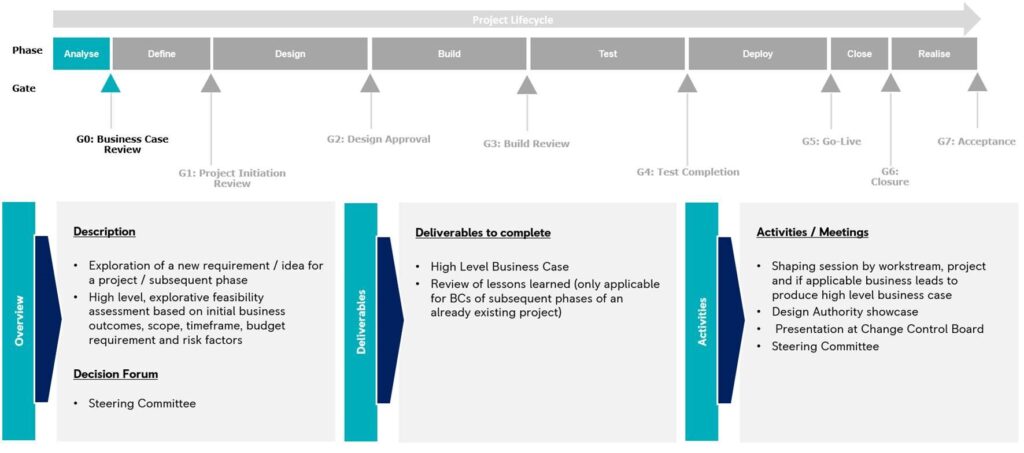


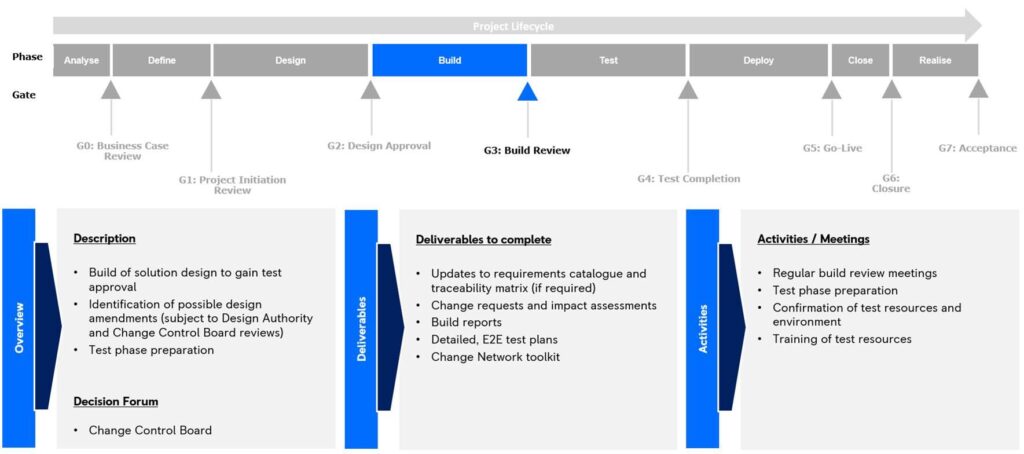
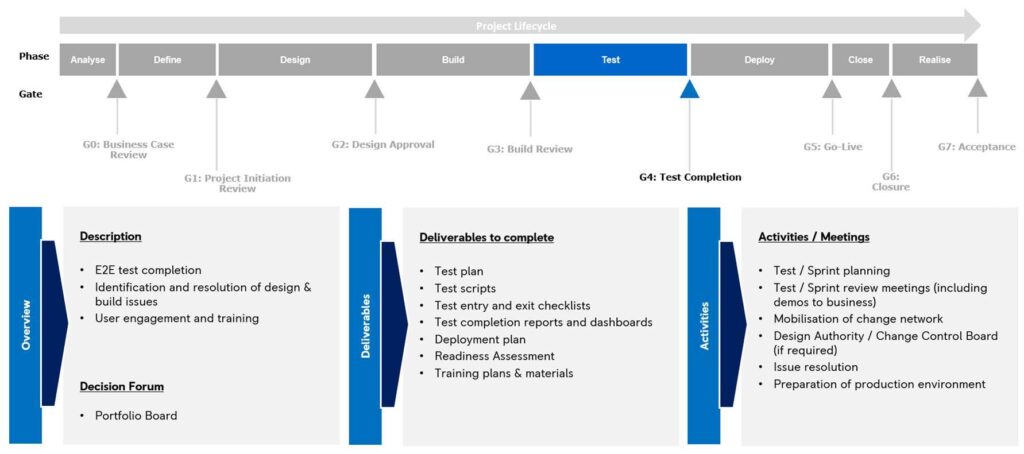
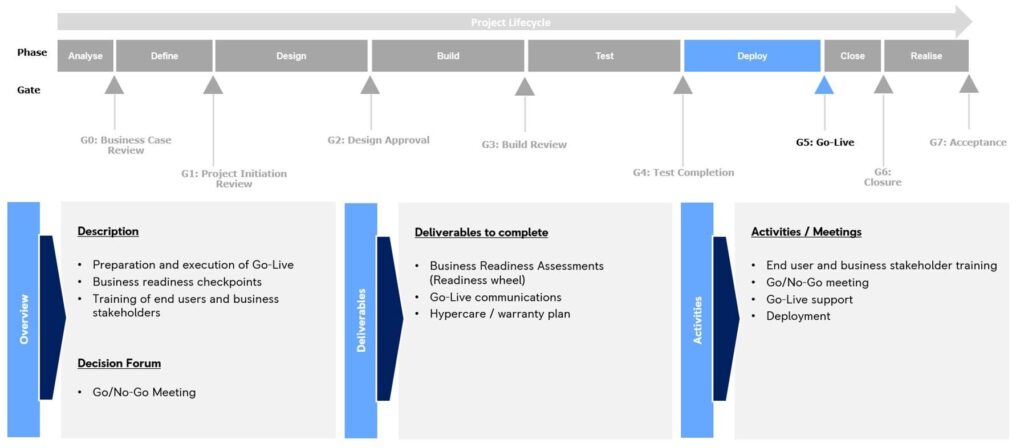

Regardless of what kind of project you’re planning, every project goes through similar stages in the cycle. Although each project will require their own set of unique processes and tasks, they all follow a similar framework.
The project lifecycle helps provide some predictability, and gives the project manager a way to tackle tasks in distinct phases.
A standard project typically has the following five major phases (each with its own agenda of tasks and issues): initiation, planning, execution, control, and closure. Taken together, these phases represent the path a project takes from the beginning to its end and are generally referred to as the project “life cycle.”
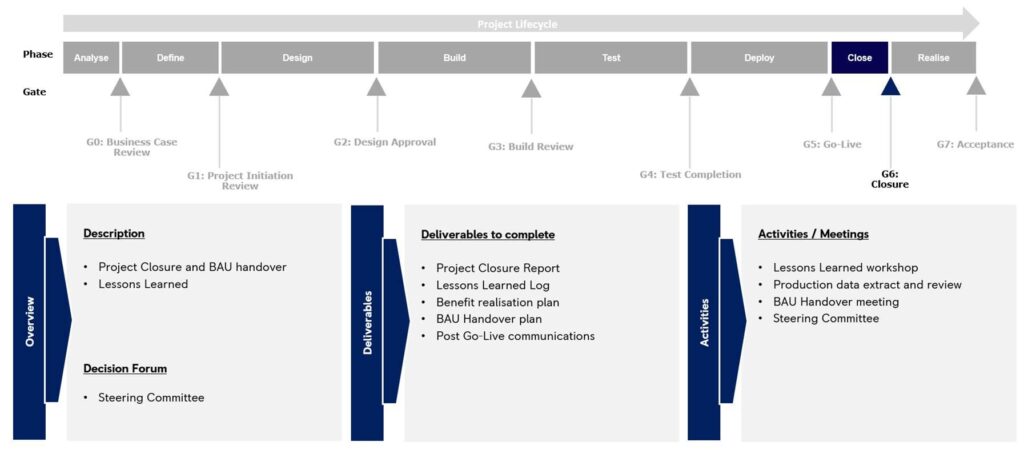
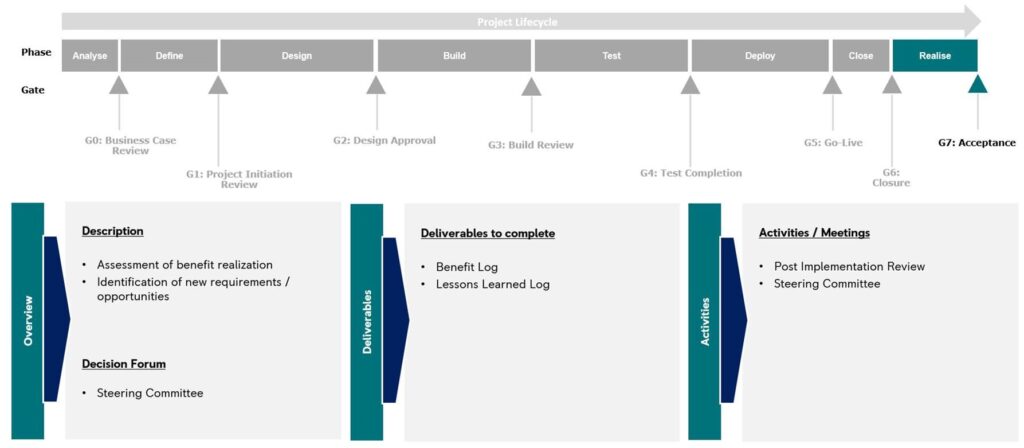
Software Project Lifecycle has eight major phases; Define, Design, Build, Test, Deploy and Close. These can be typically defined as follows:
Delivery phases and checkpoints are created to ensure assurance and control across project delivery. Projects need to pass through these checkpoints in order to secure funding and proceed to the next delivery phase.
Checkpoints are referred to as gates and are regarded as critical milestones. All gates require the completion of a number of deliverables which need to be reviewed and signed off by the respective governance bodies.